
Before Aries ever came into our lives, we had just stepped into a situation that changed everything for Gentle Spirit Horses. It was early winter, and we’d been called about a handful of weanlings that needed help. We arrived to find something entirely different: a herd of 55 Morgan horses on a property with no hay, dying pastures, and winter closing in fast. The owner was a second-generation breeder who had once raised award-winning Morgans, but time, health, and circumstance had caught up. The babies were wormy. The older horses were thin. And there was no plan for the cold months ahead.
That herd became the Iowa 41. With help from people across the country, we placed 41 Morgan horses in homes and provided feed while they waited for transport. We also learned hard early lessons about what stress, neglect, and late intervention can cost. It was the first time we realized we couldn’t keep trying to do this work privately. It was the moment we decided to become a nonprofit rescue.
And among that herd was a long yearling who should have been just another baby in a pasture. But he wasn’t.
His name was Aries.
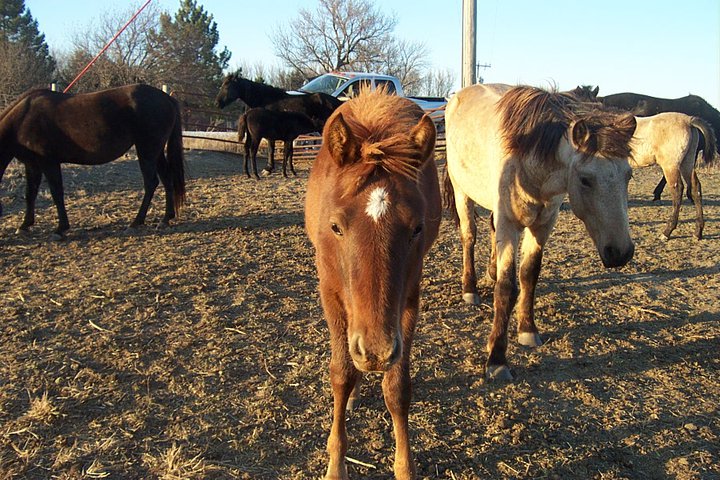
He was supposed to be a weanling running with his mama and younger sister. Instead, because he and another buckskin colt looked alike, the owner accidentally switched them. Aries was pulled from the baby pasture and put in a small pen with four mature stallions. The man handled stallions firmly, using sticks and ropes to move them, so Aries learned very quickly that human pressure meant danger. He didn’t act like a baby. He acted like a colt trying to survive a world that made no sense.
When we first met him, he would flinch if you moved a single finger. He’d scuttle to the far side of the pen at the smallest shift in your weight. And instead of trying to jump a fence when overwhelmed, he dug at the ground. Horses who have been trapped without escape often learn that digging down is the only option. Everything about him told the same story: a terrified young horse trying desperately to disappear.
He was adopted by a well-meaning person who genuinely wanted to help. But it was December in Iowa, the cold hit hard, and Aries began to mentally collapse. He stress colicked early, and because he panicked when confined, treating him wasn’t possible. A vet stood by in case he went down far enough that euthanasia was the only humane option. When he was finally allowed access to a turnout pen through a series of alleys, all he did was stand at the gate and ask to go back inside. He shut down completely.
After about six weeks, his adopter realized he needed more than they could offer. We looked for another foster, but when the only option said that if Aries ever got loose “he’d just have to shoot him,” that made the decision for us. He needed to come to me.
We drove up to bring him home, and I will never forget that first moment. He stood in the back corner of the stall with his nose to the wall and his butt to the door, doing what he had learned kept him safe. But when I walked up, he turned. He looked at me. When I held out an empty hand, he stretched his neck toward me and rubbed his nose on my fingers. It was deliberate. Quiet. Soft. And impossibly brave.
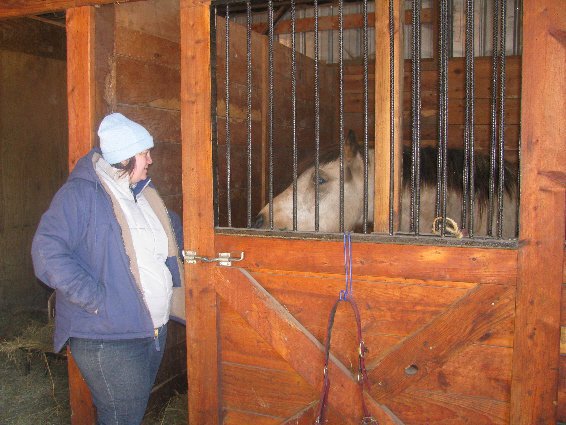
I named him Aries — a nod to Ares, the God of War, because for all his fear he carried a deep fighting spirit. I adjusted the spelling so people would say it correctly, and because Aries is also the first sign of the zodiac. It felt fitting for a horse who arrived at the very beginning of everything we were becoming.
Pirate had taught me the foundation of gentling, but Aries was the horse who stretched everything I thought I knew. The only way in was through time, consistency, and learning to make my movements small enough that he could study them and decide for himself that nothing bad would follow. For days I stood ten feet away from his food bucket on the other side of a fence, moving only a fingertip until he stopped flinching. Then a hand. Then a shift in my stance. We did it inch by inch, moment by moment, until eventually he let me set the bucket inside and stand beside him while he ate.
He lived in a 40 by 40 foot pen at the boarding barn where I kept my personal horses, so once touch was safe we started on communication. He learned voice cues. He learned to face up. He learned to self-load into a trailer and back into the front compartment so I could safely close the center gate. That was the first step toward wearing a breakaway halter, which opened the door to learning how to give to pressure, lead, stand, and finally move with me instead of away from me.
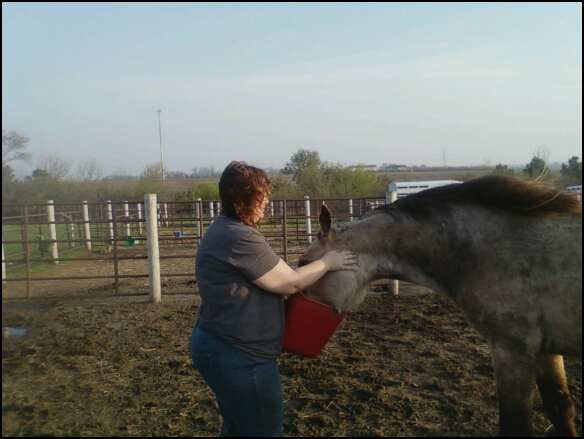
But there were things he could not easily overcome. White ropes terrified him. He couldn’t tolerate someone walking straight up to him to catch him. He could be handled and led and ridden by others eventually, but his trust was softest with me. We took him to a mustang makeover trainer to work through some of his early trauma, and even then he carried shadows only the two of us really understood.
With every tiny, steady step, he worked deeper into my heart. Horses like Aries need more than training. They need someone willing to open themselves fully, stay predictable, stay steady, and stay patient when the horse panics or shuts down or asks for reassurance again and again. Most people saw long before I did that he wasn’t going anywhere. Eventually I accepted it. He was mine, and I was his.
By three, he was learning beautifully. By four, he was attending schooling dressage shows. But that spring, I saw a slight irregularity in his gait. X-rays showed early osteoarthritis and a bone chip, likely caused by how his front feet turned in as a foal. Our vets believed the arthritis would progress and that we would lose him in his mid-teens.
I retired him from dressage. Then from riding. He is sixteen now. His fetlock has fused, he has a permanent limp, and we are beginning to see changes in his knee and hind end. We know one day the time will come when we make that decision. For now he is comfortable, deeply loved, and living the life he deserves.
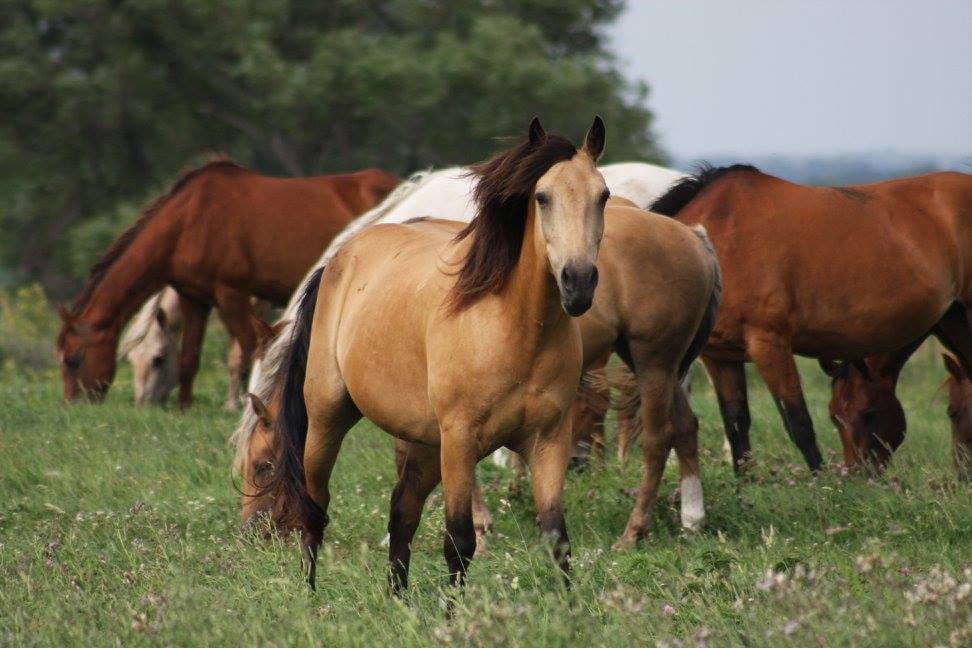
For the past decade, Aries has been the boss of the herd. A strong, fair leader who protected the babies, kept the peace, and stepped in only when needed. Our herd has always been unusually grounded and low-drama — people often describe it as “magic” — and Aries was a big part of why. New horses would walk into the pasture and almost immediately relax, as if the entire herd exhaled together. During our move from the old property, he was the last horse to be transported, and in just two days without him the herd split into small, insecure groups. The moment he stepped off the trailer at the new location, they gathered back together as one. He didn’t lead with dominance. He led with steadiness. And every horse around him felt it.
Recently he has begun stepping back as my newest horse, Arden, has taken on that role. But when it matters, you can still see Arden defer to him.
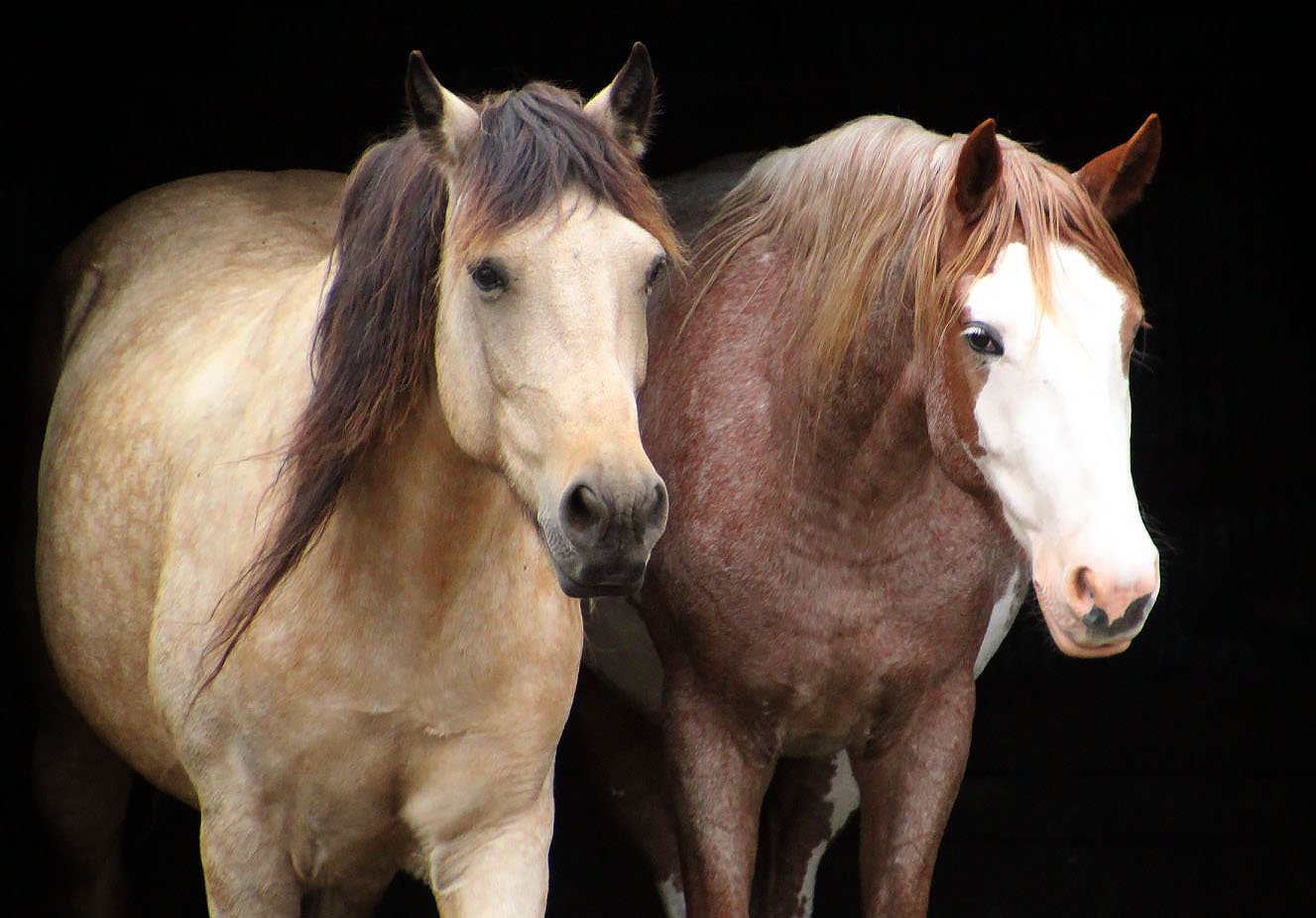
And in true Aries fashion, even now he likes to play a little hard to catch. He’ll walk just fast enough that you have to follow and convince him you meant it, then stop and look at you like “well, what are you waiting for.” I don’t correct it. It’s part of him. If I ever truly need him quickly, walking out with a bucket ends the game. But mostly, it’s his way of reminding me that healing doesn’t erase personality. It reveals it.
What Aries Taught Us
Rescue work includes loss, limitation, and imperfection — and you learn as you go.
Aries arrived during a time when we were still growing our skills and figuring out what worked. His journey is a reminder that you don’t need perfection to create a good outcome; you need honesty, reflection, and the willingness to do better the moment you know better.
Real rescue means knowing when to push, when to step back, and when euthanasia must be part of responsible care.
There was a point when Aries’ mental collapse was so deep that we genuinely questioned whether continuing was kind. Asking those questions is not failure; it’s compassion. His survival didn’t invalidate the conversation; it affirmed why responsible rescue requires the courage to face it.
Some horses don’t just need gentling — they need someone willing to become the person they can trust.
Aries didn’t heal because we had all the answers. He healed because someone showed up consistently enough for him to believe safety was possible. Time is the most valuable resource we have in rescue, and donor support is what makes that time possible for horses who need it most.
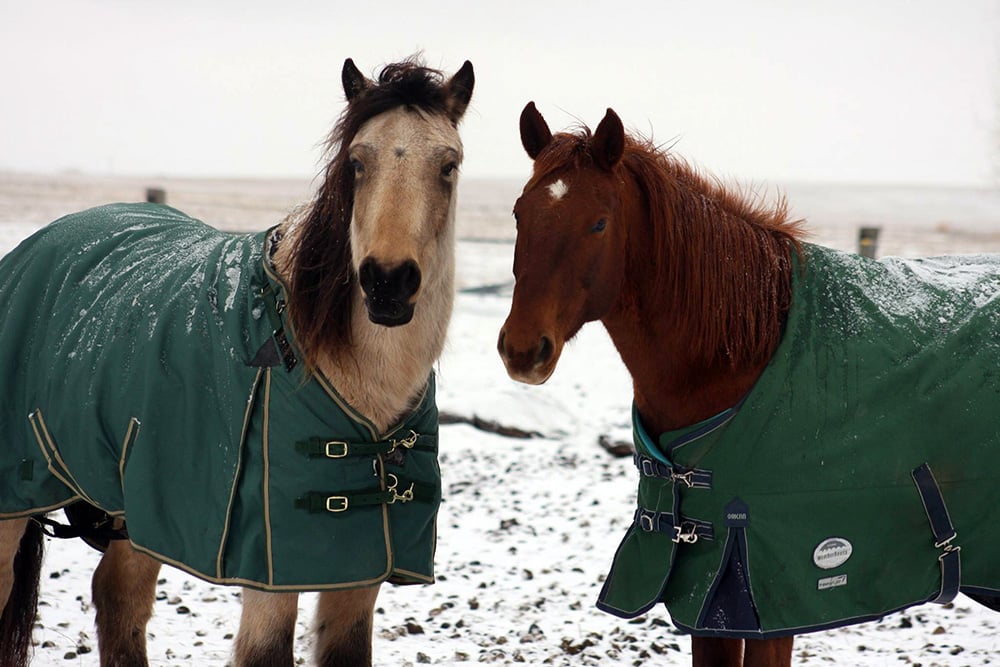
Your gift gives horses like Aries the one thing they cannot get back on their own: TIME.
Tonight, every donation to our $15,000 15-Year Match doubles to give frightened, injured, and misunderstood horses the steady, patient months — and sometimes years — they need to heal.
Give here: https://givebutter.com/neighitforward
Time is the greatest gift we can give a horse. Thank you for helping us give it.